
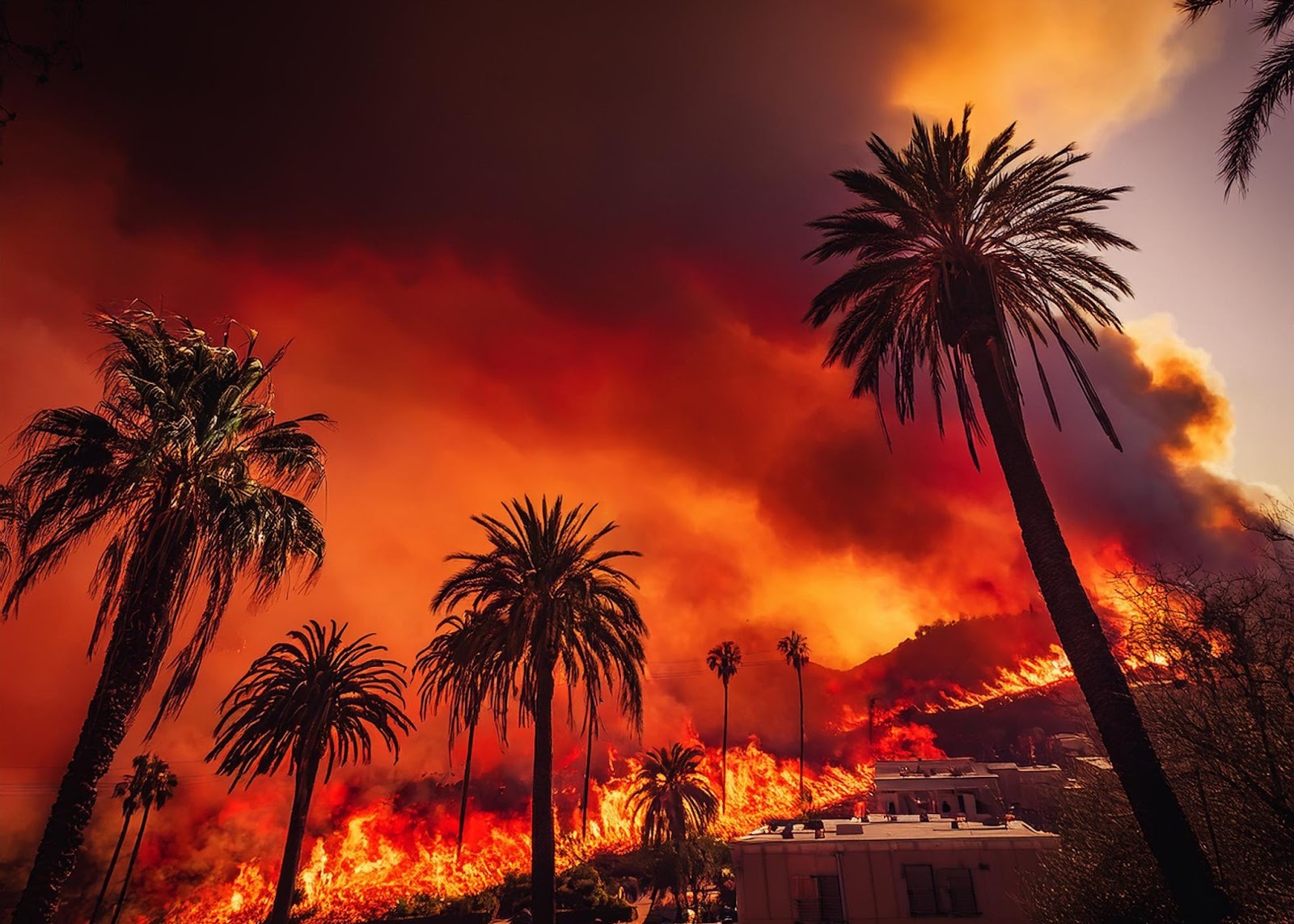
Did you know that Texas is one of the states most at risk for wildfires? Fire prevention isn’t optional if you’re a Texas homeowner. Wildfires are a scary reality here, but the good news is that there’s a lot you can do to lower your risk. By taking a few proactive steps now, you can better protect your home, your family, and your peace of mind. In this post, we’ll walk through practical fire prevention tips and protection measures you can actually use.
Fire Prevention: Stop it before it starts
Taking preventative measures is the best way to protect your property and loved ones. Wildfires can feel completely out of your control, but that’s not entirely true. There are many practical steps you can take to protect your home if one gets close. Staying alert and keeping up with regular maintenance can be the difference between a close call and a total loss. And since many wildfires are caused by human activity, prevention matters more than you might think. Here’s why.
What Causes Wildfires?
As you may know, wildfires can sometimes be caused by naturally occurring events, such as lightning. They are also closely related to climate change. As temperatures rise and droughts become more frequent, conditions for fires to spread intensify and become harder to control, making places like Texas more vulnerable to wildfire risk.
However, human-related activities actually cause most wildfires. Something as simple as a discarded cigarette can cause a huge wildfire. Other things, such as unattended campfires, sparking powerlines, arson, fireworks, and explosives can also lead to wildfires.
What can you do to prevent your home from catching on fire?
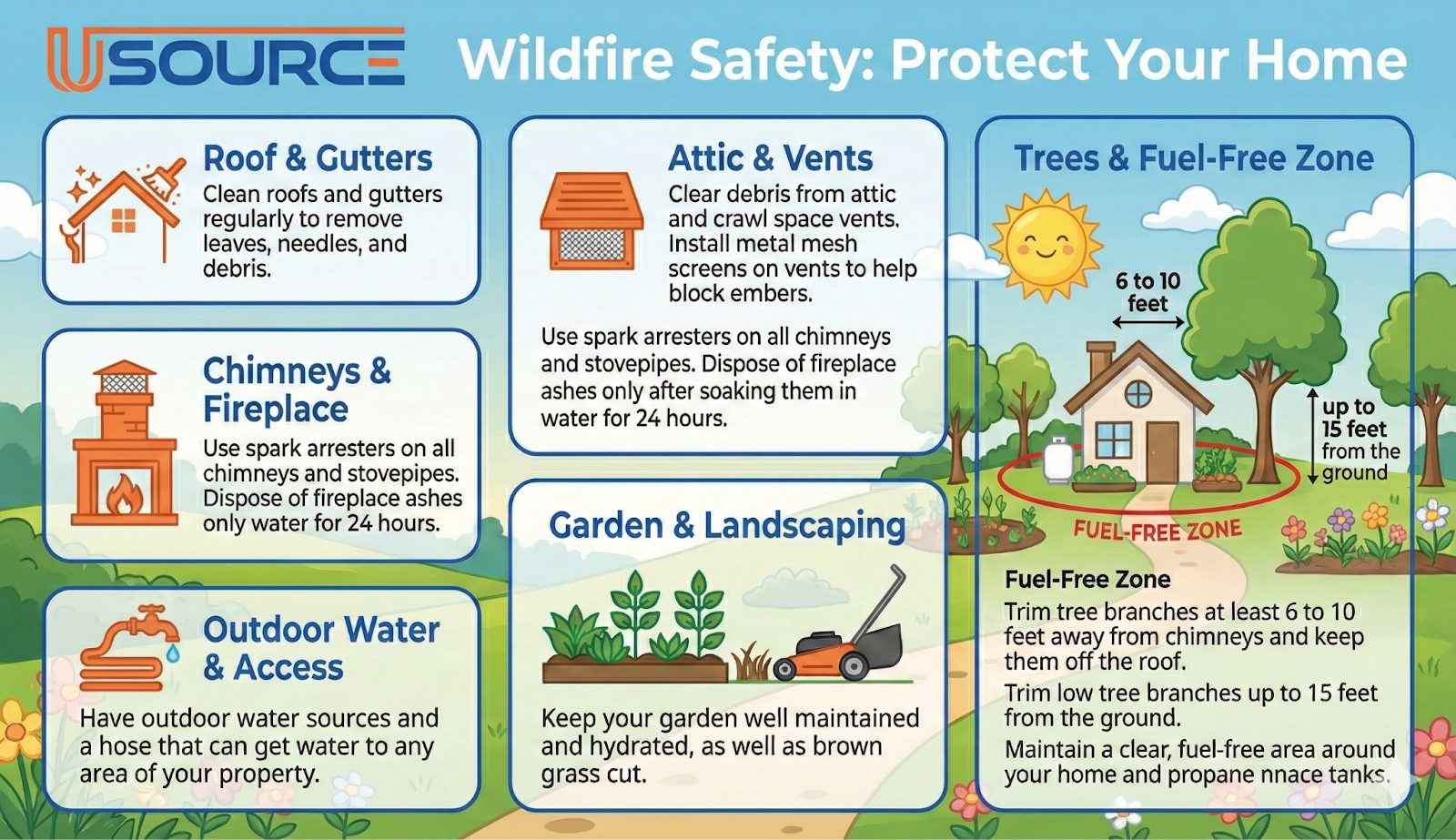
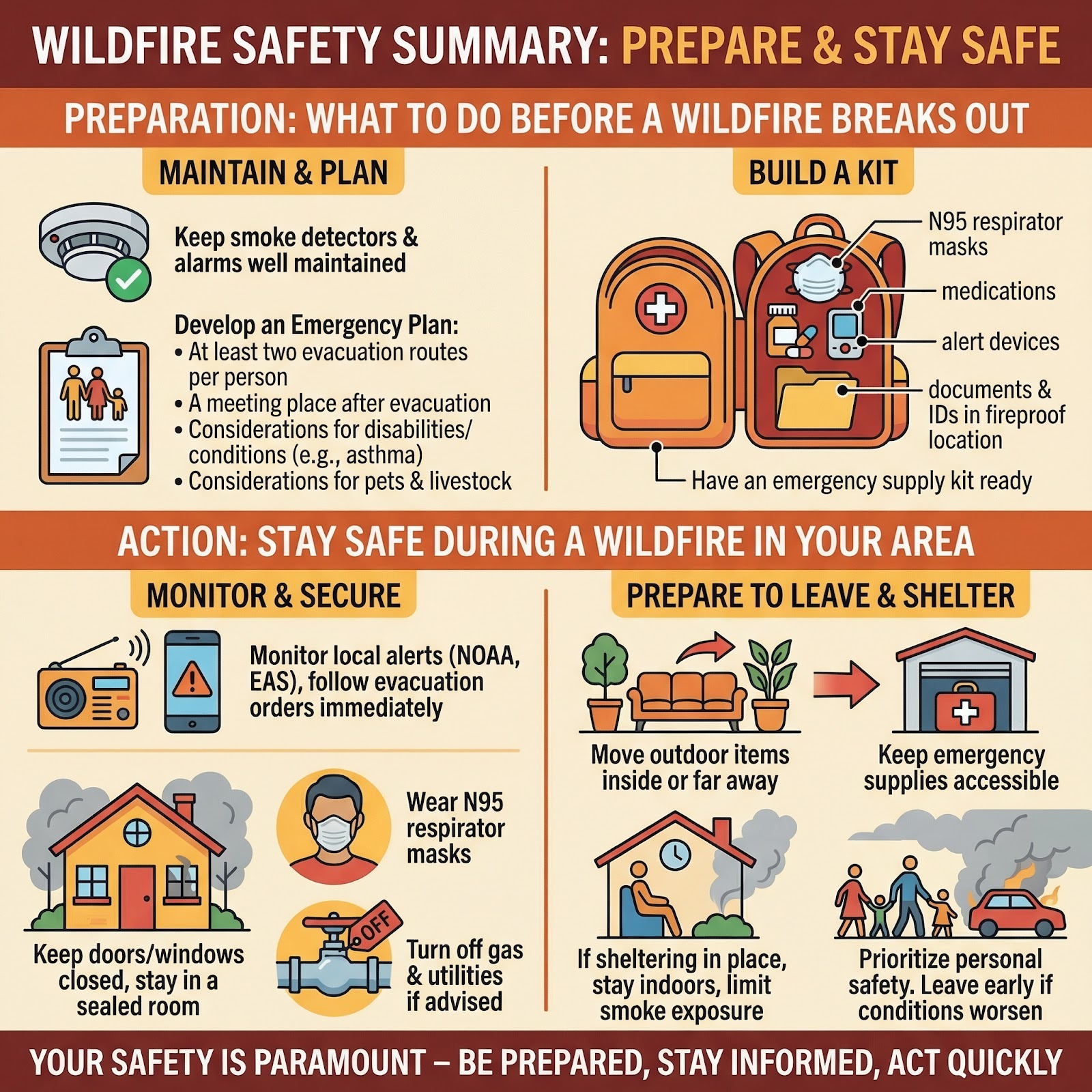
Picking up where we left off, remember to always stay aware of factors that can increase wildfire risk, especially during dry or high-wind conditions. Taking responsibility at home can make a real difference in helping protect your property and limiting how fires spread throughout your community. There are several practical steps you can take to reduce risk and improve safety around your home. For a visual aid, the infographic below breaks down key wildfire safety tips to better prepare and protect what matters most.
Research (by Frontline Wildfire Defense) shows that most homes ignite during wildfires due to embers or small flames. Another way to protect your home is to install protective gear, such as wildfire sprinklers. Other things you can install for protection include:
- Class A fire-rated roofing (metal, asphalt shingles, tile): The most fire-resistant roofing option available.
- Metal flashing in roof edges and joints: Helps block embers from entering gaps.
- Non-combustible siding (fiber cement, stucco, brick, metal): Resists heat and flying embers better than wood.
Make sure you get in touch with an expert to secure your property against wildfires.
Fire Protection: What to do When Wildfire Prevention Fails
Even with the best prevention efforts, it is a good idea to be prepared for the worst. If a fire has reached your home, never attempt to fight a fire that is spreading, involves the ceiling, or blocks your exit.
Call the fire department and get out of the house immediately if your house catches fire and is spreading quickly. With wildfires, you may know they’re happening long before they reach you. Make sure to stay informed and evacuate as soon as you’re told to do so. Also, make sure your house is equipped with the following:
Smoke Alarms: Your First Line of Defense
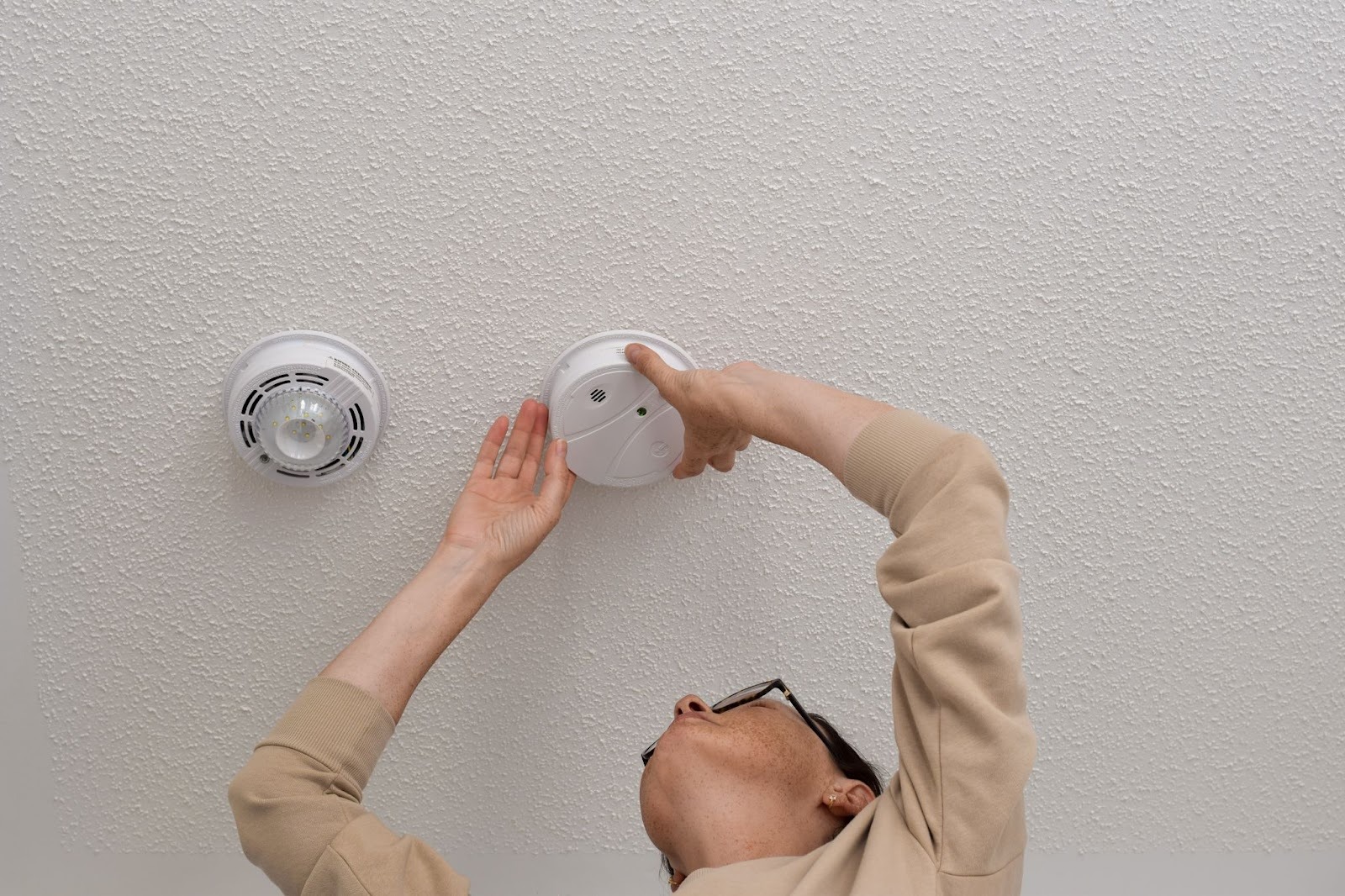
Smoke alarms save lives. They provide the critical early warning needed to escape, making them indispensable tools in wildfire protection.
- Installation: Install smoke alarms on every level of your home, inside every sleeping area, and in the hallway outside each sleeping area.
- Maintenance:
- Test them monthly by pressing the test button.
- Replace batteries at least once a year (a good time is when you change your clocks for daylight saving time).
- Replace the entire alarm unit every 10 years, as sensors degrade over time.
Have an Emergency Plan
- At least two evacuation routes for everyone in your family
- A meeting place for you and your family after evacuation
- Considerations for members of the family with disabilities or conditions like asthma, or others
- Consideration for pets and livestock
- Purchase an emergency supply kit that includes N95 respirators and medications. You can also determine a spot to keep alert devices, documents, and IDs stored in a fireproof location
Stay Safe During a Wildfire In Your Area
If a wildfire is spreading but hasn’t reached you, here’s how to stay safe:
- Monitor local alerts, such as NOAA Weather Radio and EAS (Emergency Alert System), and follow evacuation orders immediately
- Keep doors and windows closed to reduce smoke and ember entry, and stay safe in a room where air from outside is blocked from getting in
- Wear N95 respirator masks
- Turn off gas and utilities if authorities advise it
- Move anything like outdoor furniture, door mats, and potted plants inside or as far away from your home as possible
- Keep emergency supplies accessible and ready to go
- If sheltering in place, stay indoors and limit exposure to smoke
- Prioritize your personal safety and your family's safety. Leave early if conditions worsen

Even the thought of wildfires is frightening, but preparation makes all the difference. Knowing what to do before, during, and after a wildfire, and taking the right preventive steps at home, can significantly reduce risk and help protect what matters most. Here’s a quick guide you can have at hand to remember:
Get Help from Trusted Local Professionals
While owning a home in a high-risk wildfire area can sometimes feel overwhelming, you don’t have to live in fear; keep your home safe by taking the preventive measures you need. uSource makes it easy to find verified local professionals who can help with wildfire-prevention installations and home safety upgrades.
Whether you need help installing fire alarms, upgrading vents, clearing vegetation, or reinforcing your home’s exterior, uSource connects you with skilled pros who can get the job done safely and efficiently. Contact us now to learn more.
.png)